When you hit "Buy" and pay $79.99 on a console or PC storefront, what you usually get is a license to play the game, not full ownership of the copy. That gap is what the whole "do we actually own the digital games we buy" debate is about. As Eurogamer and GameSpot reported, California's AB 2426, which took effect on January 1, 2025, requires digital stores that use words like "buy" or "purchase" to state clearly that the customer is getting a license. The law is about transparency at checkout, not about stripping consumer rights, and it exempts products that can be permanently downloaded for offline use and can't be revoked by the seller.
The digital game license vs ownership debate flared up again with the launch of Grand Theft Auto VI on November 19, 2026, after the GTA 6 physical disc controversy sparked a global argument over the future of physical media.
The Legal Reality Behind Digital Game License vs Ownership
Legally, the ownership question comes down to the End-User License Agreement (EULA) players accept before launching a game. According to an intellectual property analysis by, a EULA gives users a contractual right to access and use the software within certain limits. The same agreement also sets out when the publisher can suspend or end that access, although how far those terms reach still depends on the contract itself and on local consumer protection law.
Copyright stays with the publisher in every format. What changes is how much control the buyer has over their copy:
Format | What the buyer holds | Can you resell or lend it? | If the store or servers shut down |
|---|---|---|---|
Physical disc | A copy of the game on disc | Generally yes, depending on the terms and local law | Still playable if the disc holds the full game and doesn't need servers, but online modes go dark |
Code-in-box | A download code that becomes an account license once redeemed | Generally restricted once the code is redeemed | Depends on publisher and platform policy |
Digital storefront | A license tied to your account | Generally no | Depends on publisher and platform policy |
DRM-free (e.g., GOG) | An installer you keep yourself | Generally no | The installer still works, but online services aren't guaranteed |
California's law made its mark even before it kicked in. In October 2024, PC Gamer reported that Valve had added a line to the Steam checkout page stating that a purchase of a digital product grants a license for the product on Steam. GOG jumped on the moment, pointing out that its DRM-free offline installers can't be taken away from buyers.
Read Also: GTA 6 Development Cost: How Much Did Rockstar Spend?
The GTA 6 Physical Disc Controversy and the Shift Away From Discs
Worries about losing control of the games people buy came to a head with the GTA 6 physical edition, which had been a hot topic on social media since the game's price and editions were announced in June 2026. Rockstar Games went with a code-in-box format for the $79.99 retail edition of Grand Theft Auto VI, so buyers get a physical box but still have to download the game. Rockstar's support page puts it plainly: "A disc will not be included in the box." According to IGN, the decision drew heavy criticism from players who fear GTA 6 marks the end of the game disc.
Responding to the backlash, Take-Two Interactive CEO Strauss Zelnick told The Game Business, as reported by Dexerto and TechRadar, that digital now makes up "well over 90%" of the company's business. He stopped short of saying physical releases will disappear completely, though. "It may not be the end," he said, comparing game discs to vinyl in the music industry, which is still around but only a small part of the business.
What Losing Discs Means for Consumer Rights
The controversy hit harder because it landed so close to Sony's announcement on July 1, 2026. In a PlayStation Blog post, Sony said physical disc production for all new games on PlayStation consoles will end starting in January 2028. After that, new games will be sold in digital formats only, through PlayStation Store and retailers. The policy doesn't affect games that have already released, or games releasing on disc before January 2028. A separate report that Sony's disc plant in Austria would cut production by 90% was later corrected to 10%, and it doesn't change that plan.
Former PlayStation boss Shawn Layden criticized the move. "If you can't sell a thing, that means you don't own a thing," he said (PSU). Without discs, players lose the simplest way to resell, lend or pass down their games.
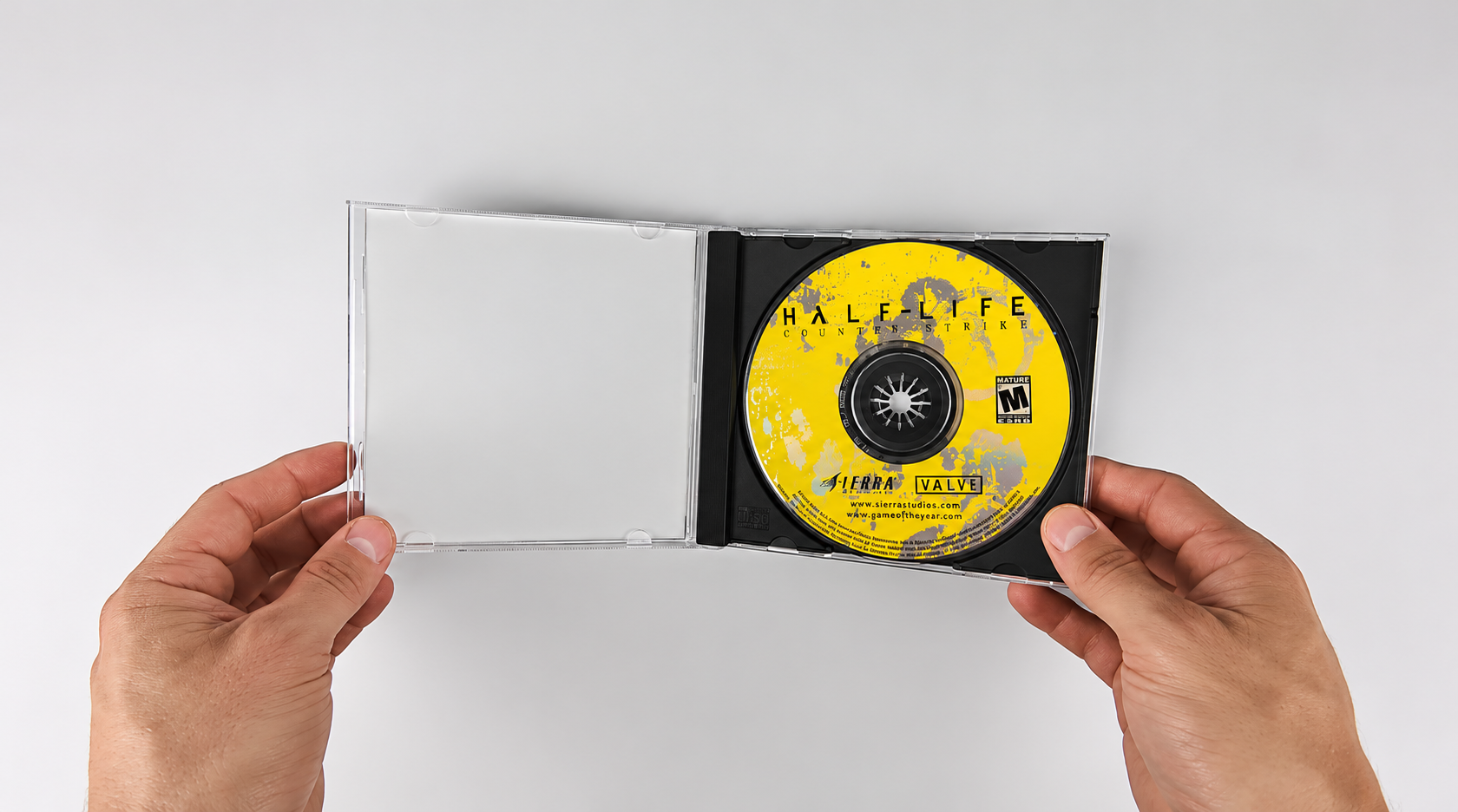
The Crew and the Rise of the Stop Killing Games Movement
The clearest example of the problem is The Crew. Ubisoft shut down the racing game's servers on March 31, 2024, and a few weeks later, as Eurogamer reported, began revoking licenses and removing the game from the libraries of players who had bought it legitimately.
That episode gave rise to Stop Killing Games, a campaign started by content creator Ross Scott that calls on publishers to provide an offline mode or community server support before shutting down a game. In the EU, the campaign's official petition, "Stop Destroying Videogames," was submitted to the European Commission on January 26, 2026, with 1,294,188 verified signatures.
What Comes Next for Regulation in Europe and the US
In Europe, the campaign hasn't produced a new law. After a public hearing at the European Parliament on April 16, 2026, and a plenary debate on May 21, the European Commission issued its formal response on June 16, 2026. That response is not new legislation. The Commission said it can't, at this stage, propose a legal obligation to keep games playable after commercial support ends, arguing that existing EU consumer law already offers important protections. Instead, it committed to starting talks with the games industry and consumer representatives by the end of 2026, with the aim of drafting a code of conduct on managing a game's end of life.
In California, the Protect Our Games Act (AB 1921), introduced by Assemblymember Chris Ward, passed the Assembly 43-16 on May 27, 2026. The bill would require at least 60 days' notice before a game's services are shut down, then give buyers one of several options: a version that doesn't need servers, a patch that makes the game playable offline, or a refund (VGC). On June 29, 2026, however, it failed in the California Senate Business, Professions and Economic Development Committee. Four members voted yes, three voted no and four didn't vote, leaving it short of a majority. The committee granted reconsideration, but the official record shows no further action after that date, so AB 1921 has not passed and is not law (California Legislative Information, CalMatters Digital Democracy). The Stop Killing Games campaign says it will try again next session.
How to Protect Your Game Library
Until the rules catch up, a few simple checks before you buy can help:
Check the online requirements. Read the store description and system requirements. Games that need a constant internet connection or a third-party account are the most likely to become unplayable once their servers go offline.
Check what's in the box. Make sure a physical edition has a disc with the full game, not just a download code. If it's a code, watch the expiration date. Rockstar Games, for example, says GTA VI product codes in Japan "will expire 170 days after the issuance date." Redeeming a code only secures the license on your account. It doesn't guarantee the game stays playable if its services shut down later (Rockstar Games Support).
Keep your DRM-free installers. For DRM-free PC games, like the ones on GOG, download the offline installers and store them on an external drive so you can reinstall without relying on the store.
Read the license. Since AB 2426 took effect, stores that use the word "buy" with California customers have to explain that they're selling a license and give access to its terms. Those terms decide what you can and can't do with the game you paid for.
Buying a digital game doesn't always mean having full control over your copy. As long as access runs through accounts, licenses and publisher servers, whether you get to keep the games you paid for comes down to publisher policy and the rules where you live.