Running a professional League of Legends team can get expensive long before the players reach an international tournament. Salaries, coaching staff, travel, and daily operations all need funding, while sponsorship deals can change from one season to the next. Riot Games introduced the League of Legends Global Revenue Pool (GRP) to address part of that financial pressure by giving Tier-1 organisations access to revenue generated through the game's esports ecosystem.
The system rewards participating teams through general revenue sharing, competitive results, and fan support. It has also evolved since its introduction, with Riot removing regional split prize pools in several major leagues for the 2026 season. Understanding those changes is essential to understanding what the GRP can realistically offer professional teams.
How the League of Legends Global Revenue Pool Works
In March 2024, Riot Games outlined a new financial model for its professional League of Legends ecosystem. The announcement focused on the LCK, LCS, and LEC, where teams had become heavily dependent on sponsorship revenue while operating expenses continued to rise.
Under the previous partnership structure, organisations had committed approximately US$10 million for league participation rights. In return, they received a share of certain league revenues, primarily generated through sponsorships. That arrangement became increasingly difficult to sustain as investment capital grew harder to secure and revenue failed to keep pace with team spending.
Riot proposed a different approach. Participating teams would receive a fixed stipend alongside revenue sharing from eligible League of Legends esports digital content, including items connected to major competitions.
Historically, revenue from esports-themed digital content associated with MSI and Worlds mainly benefited organisations competing at those events. Riot estimated that around 20 to 30 teams could participate in that revenue during a typical season.
The GRP was designed to distribute that opportunity across a wider group of Tier-1 organisations. Riot's announced framework divides the pool into three categories: General Shares at 50%, Competitive Shares at 35%, and Fandom Shares at 15%.
GRP category | Share | Distribution basis | Recipients |
|---|---|---|---|
General Shares | 50% | General allocation | Participating Tier-1 teams |
Competitive Shares | 35% | Regional standings and international results under the original framework | Eligible teams based on performance |
Fandom Shares | 15% | Development of team and player fandom | Eligible teams based on fandom criteria |
The percentages reflect Riot's original 2024 GRP framework. Regional prize-pool changes announced for 2026 concern a separate funding mechanism.
General Shares: 50%
Half of the Global Revenue Pool is allocated to General Shares, providing participating Tier-1 teams with access to revenue from the wider esports ecosystem. This allocation gives organisations a source of income that isn't entirely dependent on their performance in a particular tournament.
Consider a team that struggles through a difficult competitive season. Its operating expenses continue regardless of its league standings. Players still need to be paid, coaching staff remain employed, and the organisation must maintain its daily operations. General Shares provide a degree of financial support in that situation.
The actual amount available depends on the revenue generated by the pool. The 50% figure describes the proportion allocated to this category, while Riot's fixed stipend forms a separate part of the broader partnership model.
Competitive Shares: 35%
Competitive performance accounts for another 35% of the GRP. Riot's original framework divides this allocation into two components. One considers regional league standings, while the other rewards placements at international competitions.
A team performing consistently throughout its domestic season can therefore benefit from its competitive results, with international appearances providing another opportunity to earn revenue. For organisations investing heavily in their rosters, the system creates an additional financial incentive to compete at the highest level.
That incentive comes with a familiar problem in professional esports. Teams can spend enormous amounts trying to secure better results, particularly when competing for experienced players and coaching staff.
I think this is where financial discipline becomes just as important as competitive ambition. Additional revenue offers limited long-term value if an organisation continually increases its expenses to chase it. The distinction between Competitive Shares and tournament prize money became particularly important in 2026, following Riot's decision to remove regional split prize pools in GRP regions.
Fandom Shares: 15%
The remaining 15% of the GRP is allocated to Fandom Shares, rewarding organisations for developing strong communities around their teams, players, and brands. Established organisations such as G2 Esports, Fnatic, and Team Liquid offer familiar examples of how an esports brand can develop beyond its competitive roster. Their supporters follow player transfers, watch behind-the-scenes content, discuss matches, and remain involved even during disappointing seasons. That loyalty has commercial value. A recognisable team brand can attract sponsorship interest, encourage merchandise purchases, and keep audiences engaged between competitions.
Riot's Fandom Shares acknowledge the importance of those relationships within the professional ecosystem. The original announcement described the purpose of this category without publishing a complete formula for calculating each team's allocation. Individual payments therefore cannot be determined simply by counting social media followers or engagement.
For participating organisations, the incentive is to build communities that remain interested throughout the season, including periods when results on the server fall short of expectations.
Read also: How Esports Streaming Rights Are Challenging Exclusive Broadcasting
What Changed in the Global Revenue Pool in 2026?
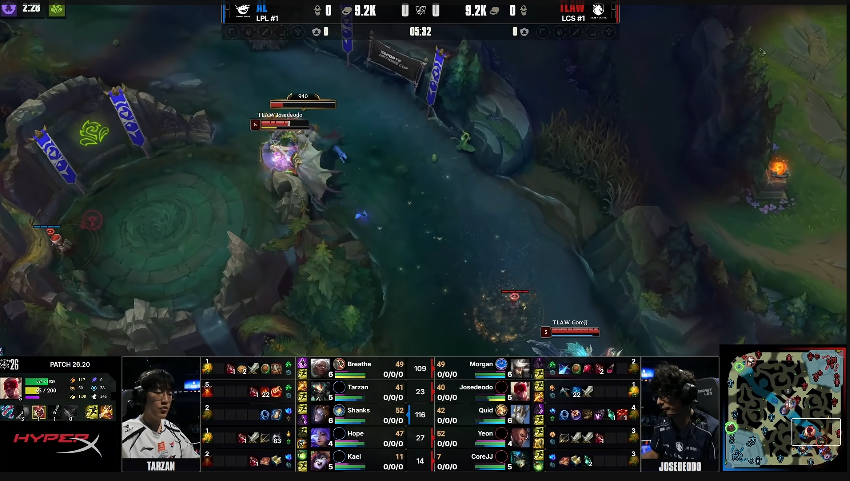
Riot's next major financial adjustment was announced in late 2025, during the LoL Showcase ahead of the World Championship Final, and confirmed at the start of the 2026 season. The change removed regional split prize pools in regions operating under the Global Revenue Pool framework, affecting the LCK, LEC, and LCS. Riot explained that individual player payouts had become relatively small, while the combined funding across leagues represented a meaningful investment that could be redirected towards longer-term ecosystem development.
CBLOL and LCP retained their regional prize pools because they operate under different partnership models. International competitions, including First Stand, MSI, and Worlds, continued to receive GRP-funded prize money. The change affected regional tournament prize funding. Riot's 2026 announcement did not publish a replacement allocation formula for the GRP's original Competitive Shares category.
For professional organisations, this changes the financial picture surrounding regional competition. Winning a regional title still brings competitive prestige and can influence qualification for international events. The former regional split prize payments, however, are no longer available in the affected leagues.
The decision also raised concerns within the industry. Gen.G CEO Arnold Hur publicly questioned the removal of LCK prize money and highlighted the financial uncertainty facing professional organisations. His concerns reflect a broader challenge for esports teams: building a business becomes harder when the financial rules surrounding competition continue to evolve.
Why the GRP Matters for Tier-1 Teams
Riot's decision to introduce the Global Revenue Pool came after several years of financial pressure across professional esports. In its March 2024 announcement, the publisher acknowledged that revenue growth had failed to keep pace with operating costs. Access to investment capital had become more limited, and some organisations were struggling to maintain healthy cash reserves. Riot had already introduced measures intended to ease that pressure, including minimum revenue guarantees, accelerated revenue-sharing payments, and deferred participation fees.
The GRP expanded the company's approach by placing greater emphasis on revenue generated through digital content. League of Legends has an advantage here. Its esports ecosystem is connected to a game where players can purchase cosmetics, event-related items, and other digital products.
Riot identified content associated with MSI, Worlds, esports emotes, and World Championship-winning teams as examples of the digital products supporting its revenue-sharing strategy. For participating organisations, the opportunity extends beyond their own merchandise or sponsorship agreements. Revenue generated through eligible esports content can contribute to a shared pool benefiting the wider professional ecosystem. The financial value of that arrangement depends on how much revenue the products generate and how the pool is distributed.
Riot's public explanation provides the allocation structure, but it does not establish a guaranteed profit margin for participating organisations.
A team receiving additional revenue might use it to strengthen its coaching department, improve player development, or cover existing operational costs. Another organisation could spend the same money on a more expensive roster. Both decisions have consequences for long-term sustainability.
I think the GRP is most useful when teams treat it as an opportunity to strengthen their finances. Its benefits become harder to sustain when every increase in revenue leads to another increase in spending.
For the LEC and other major leagues, the financial challenge extends beyond securing additional income. Organisations also need realistic budgets and business models capable of surviving difficult competitive seasons.
Why Fan Communities Matter to the GRP
The Fandom Shares category introduces another consideration into the economics of professional League of Legends. Esports organisations have spent years developing relationships with supporters through content creation, social media, player personalities, and community events. Those relationships can last considerably longer than an individual roster.
A fan might discover a team through a successful Worlds campaign, start following its players, and eventually become interested in the organisation's wider content. Even when the original players leave, that supporter may continue following the team.
Traditional football clubs provide a useful comparison. Their communities remain active through changes in management, player transfers, and disappointing results. Merchandise, memberships, and other commercial activities are built around that continuing relationship.
Esports organisations have been developing their own versions of this model. By including Fandom Shares in the GRP, Riot gave community development a defined place in its revenue-sharing framework. That creates an incentive for participating organisations to invest in their audiences throughout the competitive calendar.
There are limits to what the system currently supports. Fandom Shares are allocated within the participating Tier-1 ecosystem, with amateur teams and grassroots tournament organisers outside the announced direct distribution structure.
Grassroots communities still play an important role in developing new players, creators, and supporters. Their contribution helps sustain interest in League of Legends esports, even when they do not receive direct GRP funding.
Can the Global Revenue Pool Secure the Future of LoL Esports?
Riot's financial strategy reflects a broader change in how publishers approach professional esports. Traditional sponsorships and media agreements remain important, but the Global Revenue Pool gives digital content sales a larger role in supporting participating teams. The original framework also included another potential source of funding. Riot announced that it would contribute 50% of certain other direct revenues, including sponsorship and media income, once it had recovered its annual investment in League of Legends esports. That condition is essential to understanding the agreement. It does not mean that half of every sponsorship payment automatically enters the GRP.
Media rights are another part of the discussion. The commercial value of esports broadcasts depends on how publishers distribute competitions, negotiate platform agreements, and maintain access for their audiences.
The changes introduced for 2026 show that Riot is still adjusting how money moves through its competitive ecosystem. Regional split prize pools have been removed in GRP regions, while First Stand, MSI, and Worlds continue to receive GRP-funded prize money. The original revenue-sharing framework provides financial incentives linked to participation, competitive results, and fandom, with the precise impact on individual organisations depending on the money available.
For teams, the challenge is turning those opportunities into a business that can operate sustainably across multiple seasons. A successful international campaign can bring attention and financial rewards. A loyal community can strengthen the organisation's commercial position. Neither guarantees that spending will remain under control.
I wouldn't judge the Global Revenue Pool solely by how much revenue it generates. The more meaningful measure is whether participating teams can use that income to build healthier businesses and reduce their dependence on unpredictable financial support.
The League of Legends Global Revenue Pool gives professional organisations another way to benefit from the ecosystem they help sustain. Its long-term success will depend on whether that additional revenue translates into lasting financial stability.